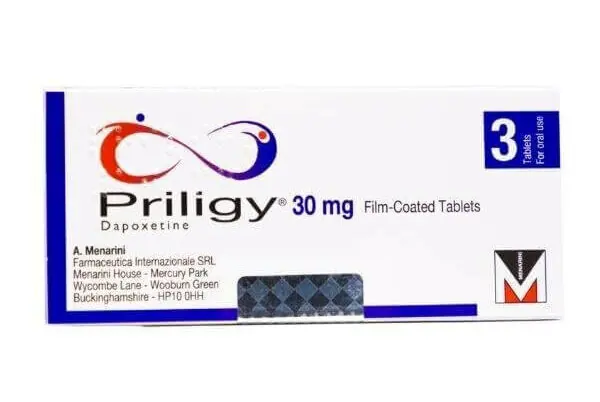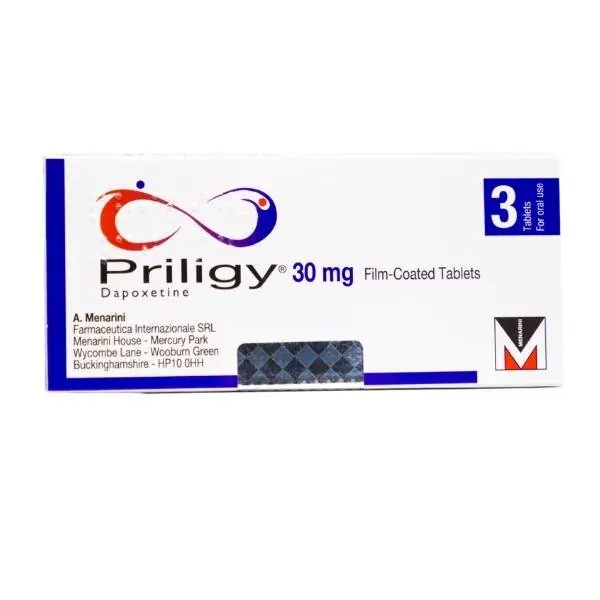
In short
- Priligy is a tablet used to treat premature ejaculation (PE).
- Generally, you take a 30-60mg dose 1-3 hours before sexual activity.
- To buy Priligy online, simply fill in our premature ejaculation consultation online and our doctor will review your answers and assess your suitability.
Priligy is a tablet used to treat premature ejaculation (PE). Generally, you take a 30-60mg dose 1-3 hours before sexual activity. To buy Priligy online, simply fill in our premature ejaculation consultation online and our doctor will review your answers and assess your suitability. If Priligy is suitable, our pharmacy team will dispatch your treatments in plain discreet packaging with no indication of the content inside. If Priligy is not suitable for you, our doctors may recommend another treatment, or issue you a full refund.
How does Priligy work?
Priligy contains the active ingredient Dapoxetine. Dapoxetine is a type of medication known as an SSRI. SSRI stands for selective serotonin reuptake inhibitor. Serotonin is a chemical involved in signalling in the nervous system. It has many different purposes but is also involved in ejaculation. As an SSRI, Priligy reduces how much serotonin goes back into the nerves, which helps to prolong the length of time before ejaculation.
Different Types of Premature Ejaculation
There are two types of premature ejaculation. There are two types of premature ejaculation. The first type primarily affects middle-aged men. Prostate disease, depression, anxiety and other health factors can lead to premature ejaculation. The other type of PE begins when a man first becomes sexually active. Anxiety or excitement can lead these early sexual interactions to result in premature ejaculation, which the body then adjusts to, meaning that it is more likely to happen again.
Treatment Options for Premature Ejaculation
Depending upon the cause of your premature ejaculation, various treatments may be most effective. If the cause of your PE is primarily psychological, counselling, psychological therapies or sex therapy may be the best treatment. However, Priligy and EMLA cream may be useful to help you delay ejaculation whatever the course. EMLA cream is a numbing cream that you apply to the penis directly, to temporarily reduce the sensation you can feel through the skin. Priligy is a pill that works chemically to prolong the time it takes for you to ejaculate.
Priligy Contraindications
Priligy may not be suitable for everyone. If you are taking other medications, or if you have certain health conditions, Priligy can cause unwanted side effects which may be dangerous.
You should not take Priligy if you have heart problems, a dapoxetine allergy, a history of fainting, manic symptoms, or if you are under 18 years old or female. You should also avoid Priligy if you are taking antidepressants. It is important that you let your prescribing doctor know if you are taking any other medications, including herbal remedies, as these could negatively interact with your treatment.
You should also speak to your doctor before taking Priligy if you have epilepsy, blood clotting problems, kidney problems, glaucoma or if you take any recreational drugs.
Priligy Side Effects
There are various side effects of Priligy. Not everyone will experience side effects, but if you experience any severe or prolonged side effects, you should seek medical attention. Always read the patient information leaflet before taking any medication.
The most common side effects of Priligy are dizziness, headaches and nausea. Other common side effects (affecting 1 in 10) include: Irritability, anxiety, restlessness, numb feeling, pins and needles sensation, erectile dysfunction, increased sweating, diarrhoea, constipation, flatulence, stomach pain, difficulty sleeping, fatigue, nasal congestion, increased blood pressure, difficulty concentrating, shaking, low libido, tinnitus (ringing in the ears), blurred vision, indigestion, dry mouth. Other side effects are possible. For a full list of side effects, see the patient information leaflet.
Sources
References
2 sources were selected to match the subject of this article. Link destinations were checked twice when added. This does not mean every statement has been individually source-mapped or clinically approved.
Reference links open the cited source pages. If you spot something out of date, tell our content team.
Keep reading
More Premature ejaculation advice